
Amber Bannister
Real Estate ● 09 Feb 2026
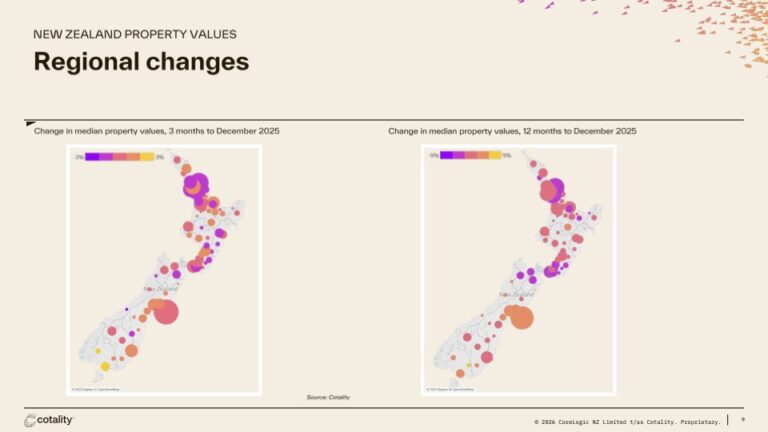
The latest regional data shows that New Zealand’s property market is no longer moving as one. While national averages suggest relative stability, the underlying picture is increasingly shaped by local conditions.
Some regions are showing early signs of recovery, while others remain under pressure — reinforcing that where you live matters more than ever.
Short-Term Changes: The Past Three Months
Looking at changes over the three months to December 2025, the data highlights a patchwork of outcomes across the country.
Several regions recorded modest gains, particularly in parts of the South Island and selected provincial centres. These areas tend to benefit from lower entry prices, tighter supply, and more stable local demand.
In contrast, some larger urban markets remain softer over the short term, reflecting cautious buyer sentiment and elevated listing levels.
Longer-Term View: The Past 12 Months
Over the 12 months to December 2025, regional divergence becomes even clearer.
While a number of regions have experienced modest declines, others have held their ground or posted gains. Markets that avoided the most extreme price growth during the boom years have generally proven more resilient.
This longer-term view confirms that the sharp nationwide correction seen in 2022 and 2023 has given way to a more nuanced phase of adjustment.
What’s Driving the Regional Differences
Regions with balanced supply and steady population growth are generally performing better than those still working through excess listings.
Why National Averages Can Be Misleading
National figures can mask important local trends. While the overall market appears relatively flat, buyers and sellers experience very different conditions depending on their region.
For households making property decisions, understanding these local dynamics is far more useful than relying on headline national numbers.
The big takeaway
New Zealand’s property market is increasingly defined by regional performance rather than national trends. Some areas are stabilising or recovering, while others continue to adjust.
As the market moves further into 2026, regional fundamentals — not broad averages — will play the biggest role in shaping property outcomes.
Source: Cotality – NZ Monthly Housing Chart Pack, February 2026