
Amber Bannister
Real Estate ● 19 Feb 2026
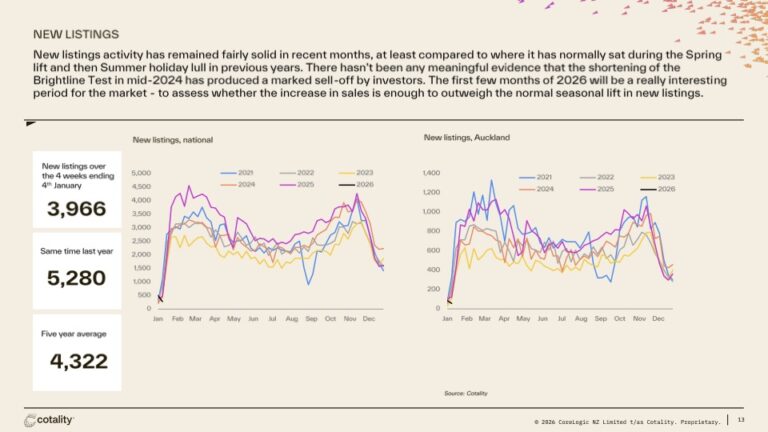
New listing activity has remained fairly solid in recent months, especially when compared with the typical spring and summer patterns of previous years. While listings have eased from last year’s levels, they remain close to long-term norms — keeping buyers well supplied with choice.
The coming months will be critical in determining whether rising sales can begin to absorb this stock.
Listings Lower Than Last Year, but Still Healthy
Over the four weeks to early January, there were 3,966 new listings nationally. This is below the same period last year, which recorded 5,280 listings, but only modestly below the five-year average of 4,322.
This suggests sellers remain active, but are more measured than during the stronger listing surge seen in early 2025.
Auckland Follows a Similar Pattern
In Auckland, new listings have tracked closely with national trends. Activity has softened compared with last year but remains consistent with seasonal expectations.
This steady flow of listings continues to give buyers leverage, particularly in higher-priced suburbs where competition remains muted.
No Clear Sign of Investor Sell-Off
Importantly, there has been no meaningful evidence that changes to the Bright-line Test in mid-2024 triggered a wave of investor selling.
Instead, listing levels appear to reflect normal market behaviour rather than stress or forced exits, reinforcing the view that the market is adjusting in an orderly way.
Why Early 2026 Matters
The first few months of 2026 will be an important test for the market:
This balance between supply and demand will help shape price movements over the year ahead.
The big takeaway
New listings remain at healthy levels, giving buyers plenty of choice, but are no longer flooding the market. The absence of a forced investor sell-off suggests stability rather than stress.
Whether listings start to fall meaningfully will depend on how quickly rising sales absorb available stock as confidence builds through 2026.
Source: Cotality – NZ Monthly Housing Chart Pack, February 2026