
Amber Bannister
Real Estate ● 27 Feb 2026
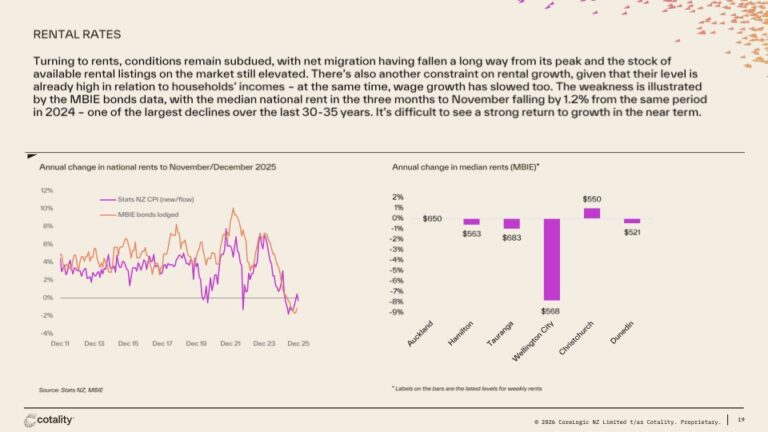
The latest rental data shows a market that has clearly lost momentum. After several years of strong increases, rental growth has slowed markedly, with some regions now experiencing outright declines.
This shift reflects a combination of softer demand, elevated supply, and limits on what households can realistically afford.
National Rents: Growth Has Stalled
Annual rental growth at a national level has weakened significantly. Data from both Stats NZ CPI (new flow rents) and MBIE bond lodgements shows rent increases have slowed to near zero, with recent readings dipping into negative territory.
In fact, median national rents over the three months to November fell by around 1.2% compared with the same period in 2024 — one of the largest declines seen over the past 30–35 years.
Why Rental Growth Has Faded
Several factors are combining to suppress rent growth:
Together, these pressures are capping how much landlords can realistically charge.
Regional Results: Mixed, but Mostly Flat to Down
The MBIE data highlights how uneven rental conditions are across the country.
Wellington stands out, with median rents showing a particularly sharp annual decline. Other centres such as Auckland, Hamilton, Tauranga, and Dunedin have seen rents broadly flat to slightly lower.
Christchurch is one of the few main centres still showing modest rental growth, supported by relatively balanced supply and demand.
What This Means for Tenants
For renters, the current environment offers some welcome relief. With more choice available and less upward pressure on rents, tenants have greater negotiating power than they have had in recent years.
This is especially true in markets where listings are elevated and demand has cooled.
What This Means for Investors
For landlords, the outlook suggests rental income growth is likely to remain limited in the near term.
With rents already stretched relative to incomes and migration easing, it is difficult to see a strong return to rent inflation without a meaningful shift in demand conditions.
As a result, investment decisions are increasingly being driven by long-term fundamentals rather than short-term rental growth.
The big takeaway
Rental markets across New Zealand have cooled noticeably. National rent growth has stalled, and several regions are now seeing rents fall.
With supply elevated, migration lower, and wage growth slowing, rental conditions are likely to remain subdued in the near term — offering relief for tenants but limiting upside for investors.
Source: Cotality – NZ Monthly Housing Chart Pack, February 2026 (Stats NZ, MBIE)